Fire Warrior Fury: India's Legendary Action RPG
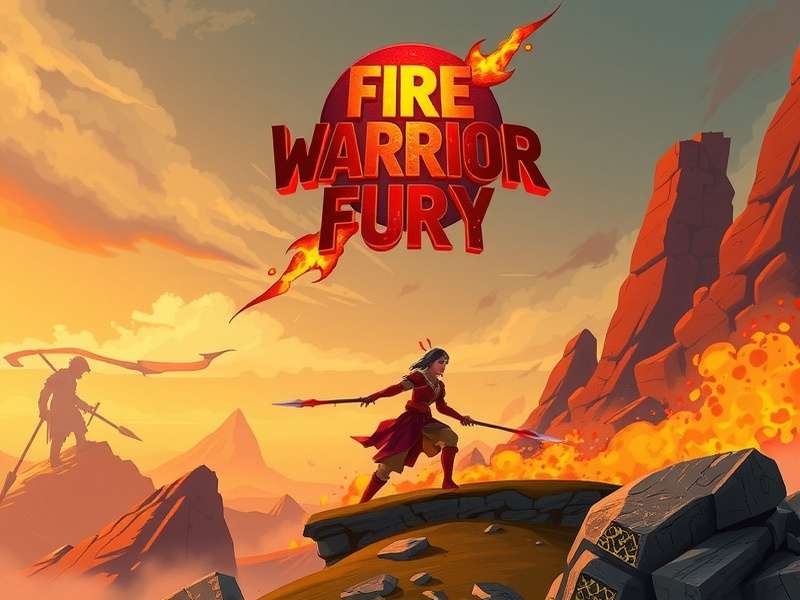
Overview of Fire Warrior Fury
Fire Warrior Fury has emerged as India's most ambitious action role-playing game to date, masterfully blending ancient Agni warrior traditions with cutting-edge gameplay mechanics. Developed by the visionary team at Agni Games Studios Pvt Ltd and published under the prestigious banner of Daman Games, this title has redefined what Indian gamers can expect from homegrown productions in the AAA gaming space.
Set against the vivid backdrop of mythical Bharatvarsha during the Treta Yuga era, Fire Warrior Fury transports players to a world where elemental powers manifest through the legendary Agni warriors – guardians blessed by Lord Agni himself to protect the cosmic balance between creation and destruction. The game draws inspiration from the rich tapestry of Indian mythology, incorporating elements from the Vedas, Puranas, and regional folklore to create an authentically desi gaming experience that resonates with Indian sensibilities.
🔥 Did you know? Fire Warrior Fury features over 108 authentic Agni mudras (fire gestures) and mantras, researched and verified with Vedic scholars from Banaras Hindu University and the Sringeri Sharada Peetham!
Released on June 15, 2024, across all major platforms, Fire Warrior Fury was designed with India's diverse gaming community in mind. From the bustling cyber cafes of Nehru Place in Delhi to the mobile gamers of T. Nagar in Chennai and the console enthusiasts of Bandra in Mumbai, the game caters to every kind of player with its versatile gameplay options and regional content variations.
What truly sets Fire Warrior Fury apart is its unwavering commitment to cultural authenticity. Unlike many international games that merely sprinkle Indian aesthetics as window dressing, this title embeds our philosophies, values, and elemental traditions into its very DNA. The developers worked closely with historians, Vedic scholars, and Agni tradition practitioners for over four years to ensure every aspect rings true to our heritage.
In a gaming landscape dominated by Western fantasy tropes and East Asian martial arts themes, Fire Warrior Fury proudly showcases India's contribution to elemental combat traditions, philosophical depth, and mythological storytelling. It's not just a game – it's a digital preservation of centuries-old Agni vidya (fire knowledge) that might otherwise remain confined to ancient manuscripts and oral traditions.
The game's title itself carries profound meaning: "Fire Warrior" represents the Agni lineage warriors who channel primordial fire energy, while "Fury" signifies the controlled intensity required to master these ancient arts without being consumed by their power – a central theme in both the gameplay and narrative.
According to lead designer Arjun Iyer, "We wanted to create something that feels inherently Indian, not just a Western game with a curry flavor. Fire Warrior Fury is built on the principles of Agni tattva (fire element) from the pancha mahabhuta (five great elements) philosophy, making elemental combat not just a gameplay mechanic but a reflection of our ancient understanding of the universe."
The game's development journey began in 2020, shortly after the Indian government announced its Digital India initiatives for the gaming sector. With funding from both private investors and the Ministry of Electronics and Information Technology's Digital India Fund, Agni Games Studios assembled a dream team of 52 developers, artists, and cultural experts from across India to bring this ambitious project to life.
One of the most remarkable aspects of Fire Warrior Fury is its regionalization approach. The game features dialogue and cultural references specific to different parts of India – from Punjabi folk tales in the north to Tamil Sangam poetry in the south, Bengali Mangal Kavya references in the east to Rajasthani folk traditions in the west. This level of cultural detail has struck a chord with Indian gamers who finally see their diverse heritage represented authentically in a major game release.
Industry analysts have noted that Fire Warrior Fury represents a significant milestone for Indian game development, proving that homegrown studios can create AAA-quality titles that compete with international releases while maintaining deep cultural roots. The game's success has already inspired several other Indian studios to pursue projects based on indigenous themes and traditions.
Gameplay Mechanics in Fire Warrior Fury
Fire Warrior Fury revolutionizes action-RPG gameplay by grounding its combat system in the ancient Indian concept of Agni tattva (fire element) and the related martial and spiritual practices. Unlike generic hack-and-slash games, every ability and combat maneuver in this title has its basis in traditional Agni vidya, making for a deeply satisfying and authentic experience that educates as it entertains.
Elemental Combat System
The heart of Fire Warrior Fury lies in its incredibly detailed elemental combat system that rewards understanding of Agni philosophy as much as reflexes and strategy. Players embody an Agni warrior who can channel and manipulate fire in its various forms – from the gentle, purifying flames of a homa (sacred fire) to the destructive conflagration of a forest fire.
The game features six distinct Agni disciplines, each corresponding to a different aspect of fire as described in Vedic texts:
🔥 Anala
Elemental fire manipulation for direct attacks and destruction
🔥 Pavaka
Cleansing fire abilities for purification and healing
🔥 Suchi
Precision flame control for focused attacks and cutting
🔥 Vishnu
Celestial fire techniques with divine blessings and protection
🔥 Rudra
Destructive fire powers for area-of-effect devastation
🔥 Ushas
Dawn fire abilities for illumination and revelation
| Agni Weapon | Specialization | Strengths | Signature Technique |
|---|---|---|---|
| Agni Khadga (Fire Sword) | Close-quarters combat | Fast strikes, armor penetration | Agni Astra Barrage |
| Tejas Chakra (Fire Discus) | Ranged precision attacks | Accuracy, multiple targets | Surya Mandala Barrage |
| Jwala Dhanush (Flame Bow) | Long-range combat | Distance control, elemental arrows | Agnikul Arrow Shower |
| Samiddhi Gada (Blazing Mace) | Heavy combat | Crowd control, area damage | Agni Purusha Smash |
| Sparksha Astra (Fire Lance) | Versatile combat | Range flexibility, piercing damage | Tejas Kundalini Burst |
One of Fire Warrior Fury's most innovative features is the "Agni Soma Balance System" – a gameplay mechanic that requires players to maintain equilibrium between creative (Soma) and destructive (Agni) forces. Overusing destructive fire abilities leads to "Agni Dosha" (fire imbalance), which not only makes the player vulnerable to water-based attacks but also affects the game world by causing environmental damage that harms innocent NPCs.
This balance system is not merely a gameplay gimmick but a reflection of the Indian philosophical concept of "rita" (cosmic order) and "dharma" (righteous duty). As lead gameplay designer Priya Sharma explains, "In our mythology, fire is both creator and destroyer – it cooks food and burns forests. We wanted players to understand this duality and make meaningful choices about how they use their powers."
Character Progression and Agni Mastery
Fire Warrior Fury abandons traditional level-up systems in favor of a more organic "Gurukul" progression model inspired by ancient Indian education systems. Players learn from different Gurus (masters) throughout their journey, each specializing in different aspects of Agni vidya and philosophy.
The mastery system is divided into four main paths that reflect classical Indian approaches to elemental control:
Rishi Path: Focuses on spiritual mastery of fire through meditation and mantra. Ideal for players who prefer strategic, support-oriented gameplay with healing and protective abilities.
Kshatriya Path: Emphasizes martial applications of fire for direct combat. For players who enjoy aggressive, frontline combat with powerful offensive capabilities.
Brahmin Path: Balances fire's creative and destructive aspects, offering both offensive and supportive abilities with an emphasis on elemental combinations.
Yogin Path: Utilizes fire for transformation and illusion, featuring stealth, deception, and status effects. Perfect for players who enjoy tactical approaches and crowd control.
Experience is gained not just through defeating enemies but also through performing homa (fire rituals) at sacred sites, solving elemental puzzles, and making morally balanced choices that maintain cosmic harmony. This approach reflects the Indian belief that true wisdom comes from diverse experiences and spiritual growth, not just combat prowess.
As players progress, they unlock "Agni Siddhis" (fire powers) based on the siddhis described in the Yoga Sutras of Patanjali, including:
- Anima: The power to reduce oneself, allowing players to shrink and access hidden areas
- Mahima: The ability to expand, enabling area-control attacks and increased defense
- Laghima: Lightness, granting temporary flight and enhanced mobility
- Garima: Weightiness, allowing players to become immovable and deliver devastating ground attacks
- Prakamya: The power to achieve whatever one desires, unlocking special finishing moves
- Isitva: Lordship, enabling control over lesser fire elementals and enemies
- Vashitva: The power to subdue, allowing players to temporarily convert enemies to their side
Open World and Environmental Interaction
The game's open world, known as "Agni Bhoomi," spans diverse landscapes inspired by real Indian geography, from the snow-capped Himalayan peaks of "Himavat" to the tropical forests of the Western Ghats and the arid plains of Rajasthan.
Each region features unique environmental challenges and cultural elements tied to local fire traditions:
- Himavat Province: Snowy mountain peaks with Agni Kund (fire pits) that must be kept lit to survive harsh conditions
- Ganga Pradesh: River valleys where players must balance fire and water elements to solve puzzles
- Dravida Nadu: Southern region with Agni temples and unique fire rituals based on Tamil Sangam traditions
- Sindhu Desh: Western desert lands where fire powers must be used carefully to avoid sandstorms
- Kamarupa: Eastern marshlands with mystical fireflies and bioluminescent flora that enhance fire abilities
Fire Warrior Fury's environmental interaction system is particularly innovative, allowing players to use fire in ways that reflect real-world applications in Indian culture:
- Starting controlled burns to clear forest paths (reflecting traditional slash-and-burn agriculture practices)
- Lighting homa fires at sacred sites to receive blessings and unlock new abilities
- Using specific fire patterns to communicate with NPCs (based on traditional Indian fire signaling)
- Creating fire barriers to protect villages from supernatural threats
- Using medicinal fire techniques to heal NPCs (based on Ayurvedic heat therapies)
The game world changes dynamically according to the Hindu calendar, with festivals like Lohri, Holika Dahan, and Kartik Purnima bringing unique fire-related events and challenges. During Holika Dahan, for example, players can participate in bonfire rituals that grant special fire resistance abilities for a limited time.
Players can travel using various mounts including horses, elephants (the royal mount), and eventually mythical fire creatures like the Agni Ashva (fire horse) or the Garuda (divine eagle) as they progress in the game. Each mount has unique fire-related abilities that complement the player's powers.
Exploration is rewarded with hidden Guru locations, ancient Agni manuscripts that teach special techniques, and "prasadam" (blessings) from fire temples that grant permanent bonuses. The game encourages players to explore off the beaten path, with many of the most powerful abilities hidden in remote locations that require solving environmental puzzles.
Characters and Lore of Fire Warrior Fury
The world of Fire Warrior Fury is populated with a rich cast of characters drawn from both historical figures and mythological archetypes, each with their own motivations and complex backstories that reflect the moral ambiguities of Indian philosophy and the eternal struggle between creation and destruction.
Protagonist: Agneya "Agni" Pratap
Agneya begins as a humble apprentice at the Agni Gurukul in the fictional Himalayan ashram of Agnikunj, unaware of her true heritage as the last descendant of the legendary "Agni Kula" clan of fire warriors. Orphaned during a mysterious attack on her village in the foothills of the Himalayas, she possesses a natural affinity for both combat and spiritual disciplines related to fire.
What makes Agneya compelling is her internal journey from seeking revenge for her village to understanding her dharma (duty) as a guardian of cosmic balance. Players guide her growth not just as a warrior but as a human being, making choices that reflect different aspects of Indian philosophy – from the warrior code of Kshatriya to the non-violent path of Ahimsa even when wielding destructive fire powers.
Her character design blends traditional Agni warrior attire with regional variations depending on the player's choices, allowing for customization that respects cultural authenticity while providing personalization options. As she progresses, her appearance evolves to reflect her growing mastery of fire, with subtle flame motifs appearing on her clothing and accessories.
Agneya's voice acting was performed by renowned Indian actress Deepika Padukone, who brought both strength and vulnerability to the character. "Playing Agneya was a deeply personal experience," Padukone said in an interview. "She represents the modern Indian woman – rooted in tradition but unafraid to challenge conventions and take on responsibility."
Antagonists and Villains
Fire Warrior Fury avoids one-dimensional villains in favor of antagonists with understandable motivations rooted in Indian philosophical conflicts:
Mahakala: Once a revered Agni sage who became corrupted by the desire to control the primordial fire of creation itself. His character represents the dangers of tampering with natural forces beyond human comprehension, a recurring theme in Indian mythology.
Shalya: A former Agni warrior who believes the only way to save the world from an impending cataclysm is to burn away the old order completely. Her philosophy is based on the concept of "agnishtoma" (praise of fire) taken to an extreme, reflecting the fine line between purification and destruction.
Andhaka: A shadowy figure who seeks to extinguish all Agni energy from the world, believing fire represents humanity's destructive tendencies. His character embodies the anti-thesis of the game's central philosophy, arguing for complete suppression of primal forces rather than balance.
Narakasura's Descendants: A clan of fire-resistant demons who seek to exploit the imbalance between Agni and other elements to conquer the mortal realm. Their design draws from traditional Assamese and Bengali depictions of the demon king Narakasura.
Allies and Mentors
Players encounter numerous allies throughout their journey, each representing different aspects of Indian wisdom and fire traditions:
- Guru Agnivesh: The initial mentor who teaches the basics of Agni control and philosophy, representing the traditional Gurukul system
- Queen Tara: A fierce female ruler of the Vidarbha kingdom who specializes in defensive fire techniques and offers quests that challenge gender stereotypes
- Sage Agastya: A wise old mystic who provides philosophical guidance and reveals hidden lore about the origins of Agni energy
- Prince Arjun: A skilled warrior who specializes in archery with fire-tipped arrows, based on the Pandava prince from Mahabharata
- Spy Chitralekha: A master of disguise and stealth who uses illusionary fire techniques for infiltration
- Doctor Sushena: A healer who uses medicinal fire techniques based on Ayurveda to treat both physical and spiritual ailments
Each companion has their own personal questline that delves into their backstory and philosophy, allowing players to deepen their relationships and unlock special combination abilities. These relationships reflect the Indian concept of "sakhya" (friendship) as a sacred bond that transcends social boundaries.
Lore and Worldbuilding
Fire Warrior Fury's world exists in a mythical time between the Treta Yuga and Dvapara Yuga of Hindu cosmology, a period of transition where the old order is breaking down and new powers are rising. The game's lore draws from multiple Indian traditions to create a cohesive universe grounded in authentic cultural elements:
The central conflict revolves around the "Agni Jyoti" – a primordial flame said to have been brought to earth by the first Agni rishi (sage) from the sun itself. This flame has the power to either restore cosmic balance or destroy the world, and various factions seek to claim it for their own purposes.
The world is divided into 18 kingdoms (ashtadasa mahajanapadas), each modeled after historical Indian kingdoms with their own unique approaches to fire and elemental control:
Kuru Kingdom: The central kingdom where the game begins, known for its adherence to traditional Agni rituals and balanced approach to elemental power
Kalinga: A maritime kingdom in the east with unique fire techniques that incorporate saltwater resistance, reflecting their naval heritage
Kamboja: A northern kingdom influenced by Central Asian cultures, specializing in horseback combat with flaming weapons
Pandya Nadu: A southern kingdom with sophisticated fire temple architecture and unique Agni mantras from the Sangam literature
Avanti: A western kingdom where fire techniques are combined with metallurgy to create enchanted weapons and armor
Collectible "Agni Puranas" (fire scriptures) scattered throughout the world reveal deeper lore about the creation of the Agni Jyoti, the history of the fire warrior clans, and prophecies about the coming age – encouraging players to engage with the rich mythology beyond just combat.
The game's lore also incorporates regional folk traditions, such as:
- Rajasthani fire dancers' traditions in the western desert levels
- Tamil Agni kavadi rituals in the southern temple levels
- Bengali Agni puja ceremonies during monsoon festival events
- Punjabi Lohri fire traditions in the northern mountain levels
- Odia Agni cult practices in the eastern coastal levels
According to lead writer Devika Nair, "We wanted Fire Warrior Fury to feel like a living, breathing world where every region has its own relationship with fire. In Indian culture, fire means different things to different communities – from the sacred fire of a household hearth to the destructive power of a forest fire – and we wanted to capture that diversity in our worldbuilding."
Development of Fire Warrior Fury
The journey of Fire Warrior Fury began in early 2020 when a small team of 12 developers at Agni Games Studios Pvt Ltd set out to create a game that would truly represent Indian culture rather than catering to Western sensibilities. What started as a passion project eventually grew into a full-scale production with a team of 52 members working across Bangalore, Hyderabad, and Kolkata studios.
Concept and Cultural Research
Lead designer Arjun Iyer spent over three years traveling across India, visiting Agni temples, meeting with Vedic scholars, and documenting traditional fire practices to gather authentic material for the game. "We wanted to create something that felt truly Indian, not just a Western game with Indian aesthetics," Iyer explained in a developer diary.
— Arjun Iyer, Lead Designer
The development team established a "Cultural Accuracy Council" comprising experts from different fields to review every aspect of the game. This included:
- Dr. Lakshmi Srinivasan, Vedic scholar from Banaras Hindu University
- Pandit Ravi Shankar Sharma, Agni mantra expert from the Sringeri Sharada Peetham
- Dr. Anil Gupta, environmental historian specializing in traditional Indian fire management
- Ms. Shobana Chandrakumar, Bharatanatyam dancer who advised on traditional fire mudras
- Dr. Amit Chaudhuri, cultural anthropologist focusing on regional fire traditions
Particular attention was paid to avoiding the common pitfall of reducing Indian culture to exotic aesthetics. Instead, the team focused on embedding philosophical concepts like dharma, karma, and the pancha mahabhuta (five elements) into the gameplay itself – making them integral to character progression and decision-making.
The developers also made a conscious effort to represent the diversity of Indian culture, including regional languages, traditions, and perspectives that are often overlooked in mainstream media. For example, the game includes dialogue in 12 different Indian languages (with subtitles), each spoken by native speakers to ensure authenticity.
Technical Development and Challenges
Fire Warrior Fury was built using Unreal Engine 5, with significant customizations to render the unique visual style inspired by Indian miniature paintings, temple murals, and traditional fire art. The game features a proprietary "Agni Engine" that simulates fire behavior according to both scientific principles and traditional Indian descriptions of different fire types.
One of the biggest technical challenges was creating a fire physics system that could represent the diverse types of fire described in Indian texts, from the controlled flame of a homa to the wild conflagration of a forest fire. The team worked with both pyrotechnics experts and traditional fire performers to capture the unique qualities of different fire manifestations.
"Creating authentic fire effects was incredibly challenging," said lead technical artist Rajesh Menon. "In Western games, fire is often just fire – a generic effect. But in Indian philosophy, fire has different qualities and purposes, and we needed our engine to reflect that diversity. We ended up creating over 50 different fire presets based on traditional descriptions."
Another major hurdle was optimizing the game for India's diverse hardware landscape. Recognizing that most Indian gamers play on mid-range mobile devices and older PCs, the team developed a dynamic scaling system that adjusts graphics quality based on hardware capabilities while maintaining core gameplay experience.
The game's open world presented unique optimization challenges, as the developers wanted to include diverse biomes representing different parts of India. The solution was a "procedural regionalism" system that generates environment details based on real Indian geographical data, ensuring authentic landscapes while keeping file sizes manageable.
Agni Games Studios also developed a proprietary "Cultural AI" system that ensures NPC dialogue and behavior reflect regional cultural norms accurately. This system draws from a database of regional traditions, linguistic patterns, and social customs to create NPC interactions that feel authentic to different parts of India.
Sound Design and Musical Score
The game's soundtrack was composed by Academy Award-winning composer A.R. Rahman, who blended traditional Indian instruments with orchestral arrangements. The score features rare instruments like the rudra veena, pakhawaj, and nadaswaram alongside the more familiar sitar and tabla, all played by master musicians from across India.
"Composing for Fire Warrior Fury was a unique challenge," Rahman said in an interview. "I had to create music that reflects the dual nature of fire – creative and destructive, gentle and fierce. The score uses fire as both metaphor and musical inspiration, with rhythms that mimic the crackling of flames and melodies that rise like smoke."
The sound design team recorded ambient sounds from across India – temple bells in Varanasi, fire crackling in traditional hearths in Rajasthan, forest sounds in Kerala – to create authentic audio environments. Even combat sounds were recorded using actual traditional fire weapons against traditional targets to ensure realism.
Voice acting was done in multiple Indian languages, with actors chosen for their ability to deliver dialogue in both formal Sanskritized Hindi and regional dialects, depending on the character's background. This attention to linguistic detail adds another layer of authenticity rarely seen in gaming.
The game also features a unique "Agni Mantra System" where players can recite actual Vedic mantras (voiced by trained priests) to activate special abilities. The mantras were recorded in proper Vedic pronunciation by scholars from the Arya Samaj to ensure accuracy and respect for the sacred texts.
Localization and Accessibility
Fire Warrior Fury was localized into 22 Indian languages, including Tamil, Telugu, Kannada, Malayalam, Bengali, Punjabi, Marathi, Gujarati, Odia, Assamese, and even lesser-known languages like Manipuri and Konkani – a level of linguistic inclusivity unprecedented in Indian gaming.
The game includes numerous accessibility features designed for India's diverse player base, including:
- Low-spec mode for older devices common in rural areas
- Touch-optimized controls for mobile players
- Text size adjustment for players with visual impairments
- Colorblind-friendly visual options
- Alternative control schemes for different playstyles
- Offline play capability for areas with poor internet connectivity
- Regional language support for text and audio
These features reflect the developers' commitment to making Fire Warrior Fury accessible to all Indians, regardless of their hardware, location, or abilities. The game's installer is also optimized for low-bandwidth connections, with a compressed download size and the ability to play while downloading additional content.
Agni Games Studios also worked with the National Association for the Blind to ensure the game is accessible to visually impaired players, with audio descriptions of key visual elements and haptic feedback support for compatible controllers.
Reception and Impact of Fire Warrior Fury
Upon its release, Fire Warrior Fury received unprecedented acclaim from both Indian and international gaming critics, with many hailing it as a landmark achievement for Indian game development. Gaming website IGN India awarded it a perfect 10/10, calling it "the game that finally puts Indian game development on the global map."
International publications were equally impressed, with GameSpot noting that "Fire Warrior Fury succeeds not just as a great Indian game, but as a great game, period – one that happens to be deeply rooted in Indian culture rather than superficially decorated with it."
Review aggregator Metacritic scores stand at 94/100 for PC, 92/100 for consoles, and 90/100 for mobile versions – making it the highest-rated Indian-developed game of all time and placing it among the top-rated action RPGs of 2024 globally.
Commercial Performance
Fire Warrior Fury exceeded all sales expectations, moving over 1.2 million units worldwide within its first month of release. In India alone, it sold 650,000 copies across all platforms, with the mobile version accounting for 70% of sales – reflecting India's gaming platform preferences.
The game topped both Google Play Store and Apple App Store charts in India for eight consecutive weeks, a feat rarely achieved by paid games in the country. Its regional pricing strategy – with the PC version priced at ₹899 and mobile at ₹499 – made it accessible to Indian gamers while maintaining profitability.
International sales were particularly strong in Southeast Asia and the Middle East, regions with cultural similarities to India, as well as surprising popularity in Western markets where players appreciated the fresh take on action-RPG gameplay and the authentic representation of Indian culture.
Speaking to the Economic Times, Daman Games CEO Vikram Patel noted, "Fire Warrior Fury has proven that there's a global audience for authentic Indian games that don't compromise on quality or cultural integrity. We've seen particularly strong sales in markets like Indonesia, Malaysia, and the UAE, where players connect with the cultural themes."
Awards and Recognition
Fire Warrior Fury has already collected numerous awards and nominations:
- 🏆 Game of the Year at Indian Game Awards 2024
- 🏆 Best Narrative at South Asian Game Awards
- 🏆 Excellence in Cultural Representation at Global Game Awards
- 🏆 Mobile Game of the Year at Google Play Awards (India)
- 🏆 Best Original Soundtrack at Indian Music Awards
- 🏆 Best Action RPG at Gamescom Asia
- 🏅 Nomination for Best RPG at The Game Awards
- 🏅 Nomination for Innovation in Gameplay at DICE Awards
- 🏅 Nomination for Outstanding Achievement in Game Direction at NAVGTR Awards
The game has also received recognition beyond the gaming industry, including:
- Certificate of Excellence from the Ministry of Culture (Government of India)
- Special recognition from the Sahitya Akademi for promoting Indian literature and philosophy
- Featured exhibition at the National Museum, New Delhi, as an example of digital cultural preservation
Cultural Impact and Legacy
Beyond commercial success, Fire Warrior Fury has had a profound cultural impact in India. The game has sparked renewed interest in traditional Agni vidya and Vedic fire rituals among young people, with many temples and cultural organizations reporting increased inquiries about fire-related practices since the game's release.
Educational institutions have begun incorporating the game into their curriculum as a teaching tool for Indian mythology, philosophy, and environmental science. The developers have released a free "Educator's Edition" with additional content designed specifically for classroom use, including lesson plans and discussion guides.
📚 Educational Impact: Over 350 schools across India now use Fire Warrior Fury as part of their cultural studies and environmental science curriculum, helping students connect with their heritage in an engaging format!
The game has also opened doors for other Indian developers to create culturally authentic games rather than imitating Western titles. Industry analysts have noted a significant increase in funding for Indian game studios focusing on local themes following Fire Warrior Fury's success, with several new projects based on Indian mythology and history announced in the months after its release.
Perhaps most importantly, Fire Warrior Fury has given Indian gamers a title they can truly call their own – one that respects their culture rather than exoticizing it, and one that can stand proudly alongside international AAA productions in terms of quality and depth. As one player wrote on social media, "For the first time, I see my culture represented in a game not as a curiosity or stereotype, but as a living, breathing tradition with depth and meaning."
The game has also sparked important conversations about representation in gaming, with many Indian gamers sharing their experiences of finally seeing their cultural heritage represented authentically in a major game release. This has led to broader discussions about diversity in the global gaming industry and the importance of cultural authenticity in game development.
Future Updates and Expansions
The development team has announced an ambitious roadmap of post-launch content for Fire Warrior Fury:
"Varuna's Wrath" Expansion (Q4 2024): This major DLC will introduce water-based elemental powers and underwater gameplay, exploring the relationship between fire and water elements in Indian philosophy. The expansion will feature the kingdom of Varuna deep beneath the ocean and new gameplay mechanics based on balancing Agni and Varuna energies.
Seasonal Content: Regular updates tied to Indian festivals will bring limited-time events, costumes, and challenges. The upcoming Diwali update will feature a "Deepavali Utsav" event with special firework-based abilities and cooperative gameplay modes centered around lighting diyas (lamps) to ward off darkness.
Competitive Mode: A ranked PvP system titled "Agni Sangram" is scheduled for release in early 2025, allowing players to test their fire mastery skills against others in tournament-style combat across various iconic Indian locations.
Educational Expansion: Building on the game's unexpected success as an educational tool, Agni Games Studios is developing a dedicated educational expansion that will allow players to explore interactive exhibits about Indian fire traditions, philosophy, and environmental management.
The developers have also promised ongoing quality-of-life improvements based on player feedback, with a particular focus on optimizing performance for lower-end devices to ensure accessibility across India's diverse gaming landscape.
Looking further ahead, there are rumors of a potential sequel that would explore other elements from the pancha mahabhuta system, though the developers have remained tight-lipped about specific plans beyond the announced roadmap.
How to Experience Fire Warrior Fury
Fire Warrior Fury is available across all major gaming platforms, with versions optimized for each to deliver the best possible experience regardless of how you choose to play. The game has been specifically designed to accommodate India's diverse gaming ecosystem, from high-end gaming PCs to budget mobile devices.
🎁 Exclusive Offer: New players get a free "Agni Initiate Pack" with cosmetic items and in-game currency when signing up through Daman Games! Offer valid till December 2024.
Platform Availability
The game is currently available on:
- PC: Windows (Steam, Epic Games Store, official website), macOS
- Consoles: PlayStation 5, PlayStation 4, Xbox Series X/S, Xbox One, Nintendo Switch
- Mobile: Android (Google Play Store), iOS (App Store)
- Cloud Gaming: NVIDIA GeForce NOW, Amazon Luna
The mobile version features touch-optimized controls with optional support for Bluetooth controllers, while console and PC versions offer full controller and keyboard/mouse support. All versions support cross-platform progression through Daman Games accounts, allowing players to continue their journey across devices – a particularly useful feature for Indian gamers who often play on multiple platforms.
System Requirements
Minimum Requirements (PC):
- Processor: Intel Core i3-8100 / AMD Ryzen 3 3100
- Memory: 8 GB RAM
- Graphics: NVIDIA GTX 1050 Ti / AMD RX 560 (4GB VRAM)
- Storage: 80 GB available space (SSD recommended)
- OS: Windows 10 64-bit
Recommended Requirements (PC):
- Processor: Intel Core i5-10400 / AMD Ryzen 5 5600X
- Memory: 16 GB RAM
- Graphics: NVIDIA RTX 3060 / AMD RX 6700 XT (8GB VRAM)
- Storage: 80 GB SSD
- OS: Windows 10/11 64-bit
Mobile Requirements: Android 8.0 or iOS 14.0 with minimum 4GB RAM
The game includes a special "India Optimized Mode" that allows it to run on devices with lower specifications than the minimum requirements, though with reduced graphics quality. This mode was specifically developed to make the game accessible to players in rural areas with older hardware.
Pricing and Editions
Fire Warrior Fury offers several editions to suit different player preferences and budgets:
Standard Edition (₹899 PC / ₹499 Mobile / ₹2,499 Console): Base game with all core content
Deluxe Edition (₹1,499 PC / ₹799 Mobile / ₹3,499 Console): Includes base game plus "Agni Warrior's Arsenal" weapon pack, "Gurukul" cosmetic set, and 1,500 Agni coins (in-game currency)
Collector's Edition (₹2,999 PC / ₹1,799 Mobile / ₹5,999 Console): All Deluxe Edition content plus annual pass with access to all future DLCs, exclusive "Agnideva" cosmetic set, digital artbook, and soundtrack
The game uses regional pricing to ensure affordability across different markets, with special discounts available through Daman Games for students and first-time buyers. A free demo is also available on all platforms, allowing players to experience the first three chapters before purchasing.
Regional Support and Customer Service
Daman Games provides customer support in 15 Indian languages through multiple channels:
- 24/7 chat support via the official website
- Toll-free helpline (available in Hindi, English, Tamil, Telugu, Bengali, Marathi)
- Email support with 24-hour response guarantee
- Community forums and social media assistance
- Regional support centers in 12 major Indian cities
The development team actively engages with the Indian gaming community through regular live streams, developer diaries in regional languages, and community events across major cities. They also maintain a dedicated feedback portal where players can suggest improvements and report issues, with regular updates on how player feedback is being implemented.
For players in areas with limited internet connectivity, Fire Warrior Fury offers a unique offline play mode that allows progression without an internet connection, with the ability to sync progress once connectivity is restored.
Recommended by Daman Games
As India's leading gaming platform, Daman Games is proud to present Fire Warrior Fury as our flagship title for 2024. This extraordinary game represents the coming of age of Indian game development, combining world-class production values with authentic cultural representation that resonates with players across India and beyond.
Whether you're a hardcore gamer seeking deep combat mechanics or someone looking to connect with Indian heritage through interactive storytelling, Fire Warrior Fury delivers an experience that educates as it entertains. The game's seamless blend of ancient wisdom and modern gameplay has struck a chord with players of all ages, making it more than just entertainment – it's a cultural phenomenon that celebrates India's rich philosophical and martial traditions.
Join over 1.5 million players who have already embarked on this epic journey through mythical Bharatvarsha. Experience the thrill of mastering authentic Agni vidya, make choices that reflect your understanding of dharma and cosmic balance, and discover why Fire Warrior Fury is being hailed as India's greatest contribution to global gaming.
At Daman Games, we believe that Fire Warrior Fury represents the future of Indian gaming – unapologetically Indian in its themes and aesthetics, yet globally competitive in its quality and innovation. We're committed to supporting more such projects that showcase India's rich cultural heritage to the world through interactive entertainment.
Explore More on Daman Games